Project Overview
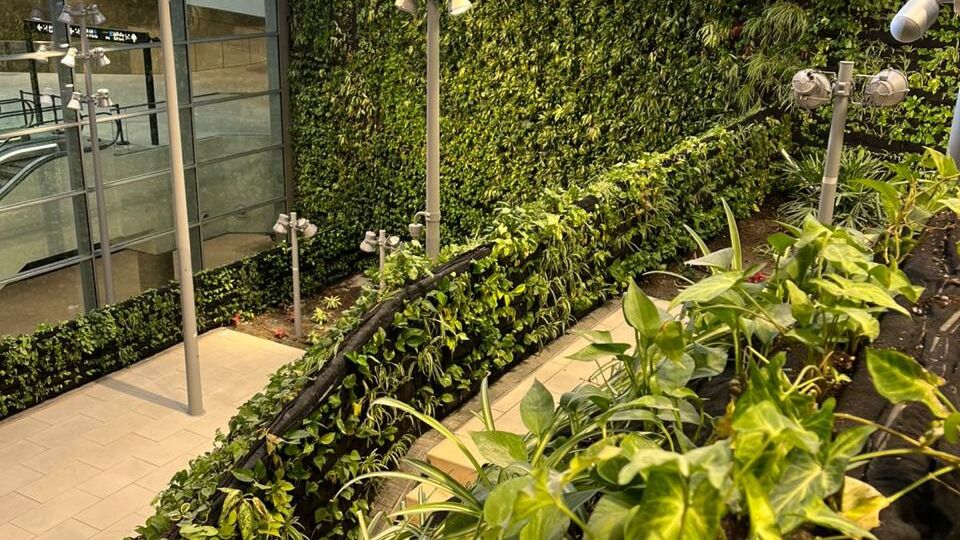
The Qasr Al-Hukm Metro Station in Riyadh, Saudi Arabia, serves as a pivotal transit hub within the city’s expansive metro network. Spanning approximately 20,000 square meters and reaching a depth of 40 meters, this station exemplifies modern architectural innovation intertwined with sustainable design elements. We’ve transformed Qasr Al-Hukm Station with an 800 sqm living green wall featuring 30,000+ plants—a vertical lung for the city.
Challenges
1.Structural Integration: Incorporating green walls into the station’s design required meticulous planning to ensure that the additional weight and irrigation systems did not compromise structural integrity.
2. Environmental Conditions: Riyadh’s arid climate posed challenges in selecting plant species capable of thriving in low-humidity environments and developing efficient irrigation methods to sustain them.
3.Aesthetic Cohesion: Ensuring that the green walls harmoniously blended with the station’s modern architecture and traditional Najdi design elements was essential for maintaining cultural and visual coherence.
Solutions Implemented

1.Structural Adaptations: Collaborations with architects and engineers led to the development of support systems that distributed the green wall’s weight effectively, ensuring no adverse impact on the station’s structure.
2.Plant Selection and Irrigation: Advanced hydroponic techniques were employed, and 30,000+ drought-resistant plant species were selected to withstand Riyadh’s climate. An automated irrigation system optimized water usage, addressing the region’s water scarcity concerns.
3.Design Integration: The 800 sqm green wall’s layout incorporated traditional Najdi patterns, seamlessly blending with the station’s decorative motifs and enhancing cultural resonance.
Outcomes

1.Environmental Benefits: The green wall contributes to improved air quality within the station by filtering pollutants and releasing oxygen. The 30,000+ plants reduce the urban heat island effect, leading to a cooler microclimate around the station.
2.Aesthetic and Cultural Enhancement: Serving as a dynamic piece of living art, the green wall enriches the visual landscape and reinforces cultural identity through its design elements.
3.Social Impact: Passengers experience a more pleasant and calming environment, surrounded by 800 sqm of greenery, potentially reducing stress and enhancing overall well-being during their transit experience.
Conclusion
The integration of 800 sqm of green walls with 30,000+ plants into the Qasr Al-Hukm Metro Station stands as a pioneering model for sustainable urban development. By addressing structural, environmental, and aesthetic challenges through innovative solutions, the project showcases the potential of blending nature with urban infrastructure. This initiative not only enhances the commuter experience but also aligns with broader sustainability goals, setting a precedent for future projects in similar environments.